PVC Hydroponics
by Kevin
Let’s take a look at some of the facts that make hydroponics and PVC pipe tubes have a happy marriage.
PVC Hydroponics Advantages
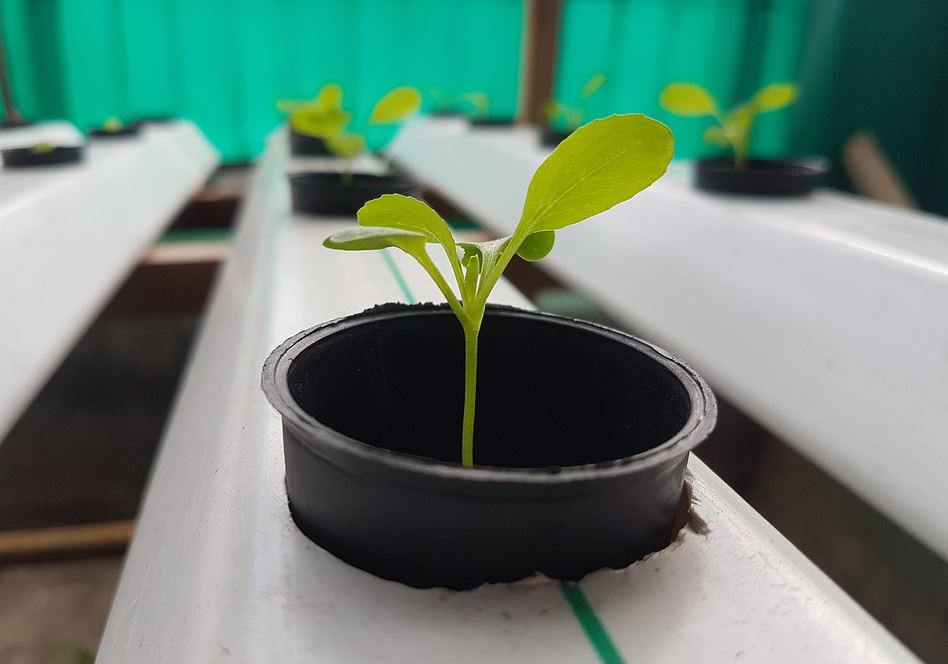
Back in the day, when hydroponics were still rather new and something only experts handled, they used all sorts of tough materials for the piping part, ranging from alloys to heavy titanium fittings and containers.
Not only were those types of materials extremely hard to manage due to their lack of flexibility and their weight, they were also very expensive to produce.
When PVC hydroponics emerged on the market, it started rolling a snowball that is still growing today. Let’s take a look at some of the facts that make hydroponics and PVC pipe tubes have a happy marriage.
1. Advantages of Using PVC – Cost
PVC is easier to produce and is basically the new standard in piping today. Everything, from sanitation pipes to ducts is going towards being made in PVC and it is estimated that today, 70% of all pipework in the United States is based on PVC.
So it’s only natural that PVC hydroponics have become increasingly popular, due to the fact that their retail price has lowered at the same rate at the piping material’s cost.
That’s why most people building a DIY hydroponic garden opt to use PVC piping, it save a great deal of money and time.
2. Advantages of Using PVC – Resistance
For a plastic, PVC is extremely durable and sturdy, which makes it a perfect material to use in the greenhouse jungle. PVC pipes in a hydroponic system take through hundreds of gallons of water but there’s little harm done to the pipes themselves, even after long years of usage.
Last but not least, PVC, despite being a thermoplastic, is resistant to heat. So if you have plants that require a lot of heat or if your HID lights are cranking up the thermometer, PVC should hold out better than many other materials.
Time-resistance, heat-resistance and corrosion-resistance…what else could you possible need?
3. Advantages of Using PVC – Efficiency
In comparison to many other materials, PVC is lighter, not toxic, not soluble, resistant and flexible enough that you won’t have to worry about any of these factors. At one point, it was a popular belief that PVC runs “bad” after a while, getting dirty and attracting all sorts of pathogens that killed the plants growing in a PVC environment. This gave rise to the theory that hydroponics is bad, which is totally incorrect!
This has systematically proven to be a wrong theory though, so no need to worry about your plants being hurt by the PVC piping or asking the question Is PVC Safe for Hydroponics?
4. Advantages of Using PVC – Flexibility
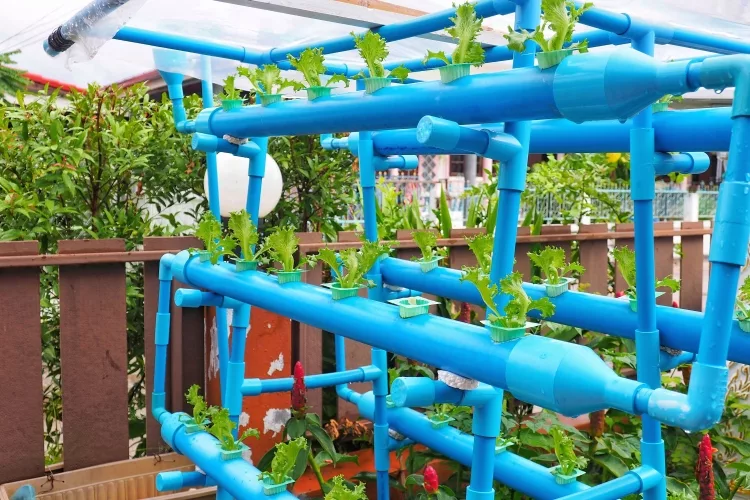
You can basically do whatever you want with a PVC pipe in terms of flexibility. Bend it at an angle, adjust it however you want or even go as far as making a circular PVC pipe hydroponic garden.
This might not be important for all systems, but if you want to save up some space, then you’ll definitely need some carefully set up PVC piping. This becomes even more important when building multi-flow systems that use a lot of tubes and pipes.
5. Advantages of Using PVC – Weight
Despite the fact that PVC is a high-mass material, it’s still light weight in comparison to most of the other stuff that’s used as an alternative in piping. This has two benefits for you, as the user: first of all, you get the components at a cheaper price, because having a light weight also allows PVC to be transported cheaper.
Secondly, hydroponics and PVC pipe tubes can be moved around and handled a lot easier, so if you’re building your own cheap system or setting it up from a kit, you’ll always prefer PVC to anything else.
6. Advantages of Using PVC – Indoors/Outdoors Compatibility
Given the right coating and glue combination, hydroponic vegetable gardening systems that use PVC can perform very well outdoors, regardless the weather conditions.
This is a quality that a lot of other materials lack, since they either broke down after suffering heavy weather conditions for a while, or they eventually react to rain and contaminate the nutrient solutions.
Obviously, if PVC can stand its ground in a harsh environment, it won’t be a problem if you take it indoors.
PVC Disadvantages
Admittedly, there are still some problems regarding PVC. If melted PVC can be toxic and many gardeners fear that the heat from their greenhouses could melt the plastic and kill their plants or even cause harm to them.
This is virtually impossible, because it takes a lot of heat to melt PVC, but it’s still an issue that concerns people.
Even with the environmental and toxicity problems surrounding it, PVC is probably the most widely used material in hydroponics and there’s no reason to believe this will stop in the near future.
If you want to know specifically which plastics are safe for hydroponics, or whether or not PVC is safe for your garden, you can check out the links for answers to those specific questions.
How to Build PVC Pipe Hydroponics
One of the beautiful facts regarding PVC pipe hydroponics is that you can be very creative about them and you can set them up, bend them and arrange them almost anyway you like. This is extremely helpful when you’re planning on growing your plants in small spaces, where having a huge system would not be very practical.
If you haven’t decided on a PVC hydroponics system so far, I would recommend you try out a multi-tier one, because they’re the most practical yet (although not as easy to build as other systems like a bucket system, but if you follow the directions closely, it shouldn’t be a problem).
Let’s start by listing the components you’ll need in the creation of this multi-tier PVC system.
PVC Hydroponics – Components
You can purchase some of the components from your local store (Home Depot, Walmart, etc) or order them online from a recommended hydroponics store.
You will require various sizes of PVC pipes. If you can’t get them from a store, you can try making them yourself if you’re good with that kind of stuff. Regardless of how you get them, here’s what you’ll need:
- A large container, preferably around 30 gallons
- A submersible under water pump that can get around 150 gallons of water going per hour
- Water hoses
- A ¾ x 10″ PVC thin wall pipe
- A ¾ x 3 ½ PVC thin wall pipe
- 4′ x 4″ thin-wall PVC pipes
- 4″ PVC end caps
- PVC elbow with outside threads on one end
- ¾” PVC elbows
- Several Styrofoam cups
- Growth Media
PVC Hydroponics – Let the Building Begin
If you find the process of building your own system too difficult, consider buying one of our recommended hydroponic systems or an easier drip system.
The first thing we need to do is build the frame of the system, which will be made out of 4″ diameter half circles. Both support boards should have a single half circle that’s cut at the same interval, otherwise the system will lose balance.
Next up, use a drill to get several holes down through the 4′ x 4″ PVC pipes. They should look like flutes at the end, with the holes symmetrically drilled along their length. You will have to be careful with the drill as to not hurt the entire piping.
If you’re using 3 pipes, have a hole drilled in the side of each one, because you’ll need to connect them through these holes. Each two pipes should be connected at a different end, so if you’re using 3 pipes, pipe number 1 and 2 should be connected at the left end, then pipe 2 and 3 at the right end.
Similarly, if you’re using 5 pipes, you should connect 1 and 2 left, 2 and 3 right, 3 and 4 left and 4 and 5 right. This creates a longer flow in the system and allows for better management overall.
One last thing you need to handle with the pipes is gluing end caps at each of their sides.
The mainframe of your PVC pipe hydroponics system is almost built, now all you need is to connect the piping to the container. Connect the hose to the pump inside the container and fill it up with nutrient solution and water.
Now, take each Styrofoam cup and drill a hole at their bottom, then fill them up with the best growing medium you can find and plant the seeds.
Your multi-tier PVC pipe hydroponics system is done!

About Kevin
Thoughts on "PVC Hydroponics"
 |
 |
 |
 |


Hydroponics Tips