How to Grow Hydroponic Strawberries
by Kevin
Find out how to grow hydroponic strawberries by filling out their needs for steady temperature, humidity and light levels. It takes patience and care, but you can grow strawberries successfully.
How to Grow Strawberries Hydroponically
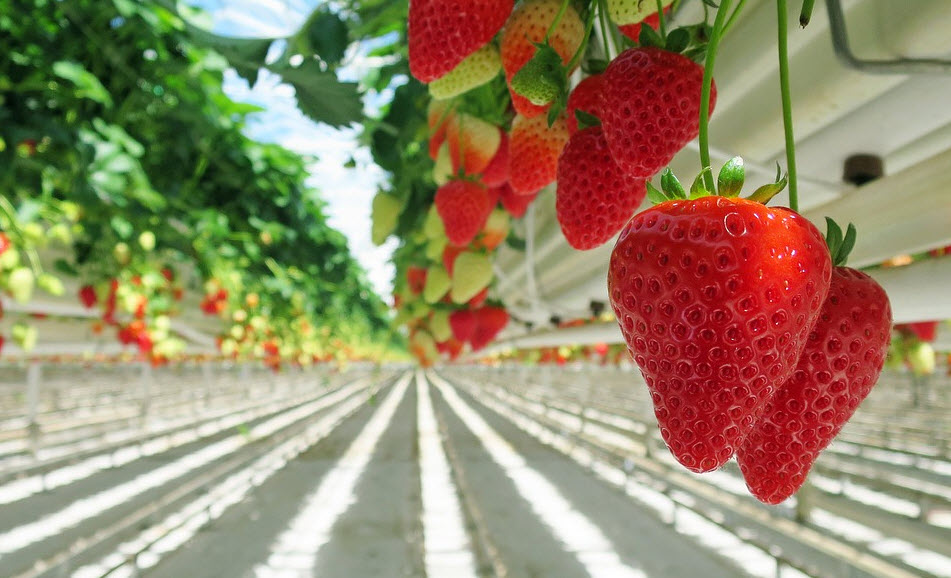
It's amazing to see how many people look for information over the Internet on how to grow hydroponic strawberries. Despite the fact that strawberries are harder to grow in a hydroponic system than many other fruits and vegetables, a lot of people seem to think of them as an end-goal of their hobby, or business.
Before going further and explaining how to grow hydroponic strawberries, let me tell you WHY you should grow them in the first place. There are two main reasons for which people grow strawberries using hydroponics. One of them is for personal use, throughout the season.
Hydroponic strawberries can be grown and picked in any month, regardless of the season outside, if you provide them with the right conditions. Think about getting home from work one late evening in November, craving some fresh fruit to relax your taste a bit, after that hasty lunch break sandwich you had last. Obviously, strawberries don't grow in November naturally and the store is too far away to go get some. But wait, your home-grown hydroponic strawberries are fully grown in the other room and you can pick them right out of their foliage!
The second reason you would want to learn how to grow hydroponic strawberries would be for profit. Yes, strawberries can make you a hefty profit…provided the fact that you sell them when they're out of season and they're bigger and more nutritious than what the local trader used to sell in August.
Of course, the only way you can accomplish this is by growing hydroponic strawberries instead. Growing them this way instead of using actual soil will also save you a buck or two in the long run, since crops are a lot healthier if you grow them in hydroponic systems and they're also easier to maintain.
But let's get back to the subject and see exactly how to grow hydroponic strawberries, regardless of what you plan on doing with them afterwards. Take a look at the factors you need to be careful of during the process:
Temperature Control
How to Grow Hydroponic Strawberries - Temperature Control
I'm not really sure if there is an actual strict temperature limit studied by someone for hydroponic strawberries, but in general you will want to keep the heat up at around 70F during the day and 57F during the night. You should make sure that temperatures don't go beyond or drop below these limits, since they can have severe effects on the growth of the strawberries. If temperature levels are too high, strawberries will stop producing flowers and fruit, so your work will be cut short. Similarly, if they go too low, the strawberries' vegetative growth will be hindered and fruits and flowers can grow harder or smaller, or simply not grow at all.
Humidity Control
How to Grow Hydroponic Strawberries - Humidity Control
Strawberries like to get wet, so they like higher humidity levels. Some hydroponic systems have humidity controllers on them, but when you're growing large amounts of hydroponic strawberries you will have to provide them with external humidity as well, especially if you're growing them in a greenhouse. Tweaking humidity levels can also help you get rid of foliage pests such as various insects, spiders and thrips.
Light Control
How to Grow Hydroponic Strawberries - Light Control
Strawberries, like most other plants, have their own photoperiod and they need light at specific times. If you're growing them in a greenhouse that has a lot of incoming natural light, this won't be an issue since the strawberries will draw their light naturally from there. When the sky is clouded for longer periods, or some plants are positioned in darker areas, you may want to cast some additional lights to help them out. However, hydroponic strawberries aren't as demanding on light as they are on other factors, such as temperature for example.
The Hydroponic Strawberry Revolution
As soon as the year goes into its declining temperature phase, at the end of the summer, strawberry stocks also dwindle down, since weather conditions become too tough for growing them with traditional agricultural means. The ones you'll still see marketed are the result of the hydroponic strawberry industry, which is in a constant rise over the past few decades.
Strawberries are trickier than many other fruits or vegetables to cultivate, mostly due to the fact that they're very pretentious when it comes to soil and weather conditions. If the soil isn't fertile enough, or if the weather is too hard on the crops, strawberries are very hard to grow properly.
The hydroponic strawberry systems though, can avoid all these negative factors. The heat, humidity, fertility and light required by these delicate fruit can all be simulated in a greenhouse environment perfectly all year round, so there's not a big risk factor involved, like there is with growing them in soil.
Using hydroponics with strawberries has another major advantage. Strawberries are also very vulnerable to pests, thrips and mites. If you leave a strawberry culture out in the open to grow without any pest control, you'll notice that almost half of it will come out healthy. Another good chunk of this healthy amount will be smaller and less nutritious, because pests suck out most of the fruits' nutrients, even if they somehow manage to grow.
In soil cultures, the only way we can keep these pests away from the strawberry crops is by sprinkling methyl bromide all over it, which kills everything that might be harmful to the crops, but unfortunately is also toxic for humans. To the joy of the hydroponic strawberry growers, methyl bromide and several other pesticide solutions that are similarly toxic to humans are fast approaching a ban in the United States and several other countries.
Amongst the many vegetables and fruits grown in hydroponic gardening systems, strawberries are topping the list. That's not only due to the fact that they're so much harder to grow in normal soil than in a controlled greenhouse environment, but also because they can be marketed throughout the year, several times per month.
But that's not the only reason that the hydroponics strawberry market is so profitable nowadays. Besides selling the fruit off-season for a hefty profit, you will also be able to market them for their ornamental value! Indeed, more and more design and ornamentation companies use fruit baskets as a means to profit and strawberries are a constant choice with them, due to their small size and colorful nature.
If you're planning on taking up growing hydroponic strawberries, here's a word of caution first. Since they're so delicate, getting the right conditions, even in a controlled environment is quite difficult. You'll have to think about lighting, humidity, temperature, nutritious solutions and irrigation and the entire hydroponics system is bound to cost you a solid initial investment.
If you're new to the field of growing soilless plants, it's advisable if you start with a less complicated fruit or vegetable, one that you can experiment with and it will still not mind your treatment. You will also have to be careful on the type of strawberries you'll be growing in your hydroponics system, since not all varieties respond the same in a controlled environment.
In conclusion, it's worth noticing that the hydroponic strawberry revolution is still in its infancy, but it definitely has a bright future ahead. Whether you grow them for their ornamental value or for their sweet and nutritious taste, strawberries remain one of the strong points of the hydroponics industry.
Advantages and Disadvantages of Strawberry Hydroponics
Find out all about the pros and cons of strawberry hydroponics from this article, which tries to present them in a detailed manner.
If you're even slightly interested in gardening and hydroponics, there's almost no chance you missed reading or hearing about one of the hottest subjects in the field: strawberry hydroponics. As with all matters that are discussed and over discussed, strawberry hydroponics come with a lot of confusing and misleading information attached. If you surfed the Internet and came across people discussing the disadvantages and advantages of growing hydroponic strawberries and were left clueless, have no fear. The following article will try to shed some light for you, given that you have 3-4 minutes to spare.
Advantages of Using Strawberry Hydroponics
Before going into the actual details, let's see what causes strawberries to be hard to grow in the other popular environment, namely soil. For starters, you have the soil itself…which is often ridden with all sorts of pests, mites, parasites and so forth and all of these have a negative effect on the growing strawberry, either sipping away its much needed juices, or simply eating away on the fruit or its roots. Using strawberry hydroponics, you eliminate all of these destructive factors with one swing, since you lose the environment that also grew the pests: soil.
Another major advantage that comes with growing hydroponic strawberries is related to the above mentioned one, namely the fact that they don't require pesticide solutions. On soil grown strawberries, in order to get rid of the parasites and pests chewing away nutrients from your fruits, you would have to sprinkle them with methyl bromide, which kills the evil doers, but is also toxic to humans. So with strawberry hydroponics, you get to keep all the fruit you grow, since there's no loss from soil pests AND you don't need to fumigate them with all sorts of poisons.
Strawberry hydroponics have another major advantage in that they're very cost effective.The initial investment will be higher than if you would use soil to grow them in, since hydroponic devices, nutrient solutions and other related factors can amount to a hefty sum at first. But after breaking the bank that one time, you won't really have to worry about costly additions to your strawberry hydroponics system anymore.
If you're marketing the fruit, then the cost efficiency goes sky high, since hydroponic strawberries can be grown and harvested off season and they can be picked several times during a year. If you want to cut down costs even further, you can get a hydroponic gardening system that recycles the nutrient solution and reuses it automatically (such as drip-based, aeroponic or flood and drain systems).
Disadvantages of Using Strawberry Hydroponics
Like all good things, growing strawberries using hydroponics has a few downsides. Remember how I mentioned that you automatically get rid of soil pests by taking the soil away from your strawberries?
Well that only works with soil pests, since foliage pests will still be a problem. These include spiders, insects and powdery mildew that can attack your strawberries and cause some serious damage. Most of them can be fought by altering the humidity and temperature levels of the hydroponics environment, but that isn't guaranteed 100%.
Another disadvantage is the strawberry's delicate nature. Unlike many other fruits grown in hydroponic environments, strawberries require a lot more attention and environmental factors need to be tweaked down to perfection if you want the best crops. This is especially annoying for newcomers, but then again it's advisable that you start out with another type of fruit or vegetable if you're fresh to hydroponics.
How to Build a Homemade Hydroponic System for Strawberries
Ever wanted to get fresh strawberries each morning out of your own garden? With the help of hydroponics you can, but take note that strawberries are a pretentious bunch and require some special settings. Find out how to build a homemade hydroponic system for strawberries from this article.
When it comes to hydroponics, strawberries are the talk of the town, as they're one of the plants that were grown in soilless conditions with the most success. Still, the relationship between hydroponics & strawberries remains a trouble riddled one, mainly because of the fact that the fruit are rather pretentious and not all hydroponic systems will cut the mustard for them. Things get even more complicated when you're trying to learn how to build a homemade hydroponic system for strawberries.
Browsing the Internet, a lot of largely inexperienced hydroponic gardeners will jump in with advice based on something they heard in the wind and that can obviously only harm the industry as a whole.
So what I'm going to try to do next is clear some of the rubble and confusion forming up on various forums and hydroponics related sites, by giving you a guide on how to build a homemade hydroponic system for strawberries.
Choosing the Right Strawberry Hydroponics System
Like I said, there are many opinions on the Internet on what is the best hydroponic system for strawberries, but to be honest it all boils down to two things: whether you want a system that's easy to build, or one that's best suited for hydroponic strawberries.
If you would rather buy an already made system perfect for your strawberries, I suggest you look at some of our recommended systems.
The "easy-to-build" systems are the ebb and flow, drip and water culture. Obviously, they're best suited for inexperienced gardeners who have just started on the path of hydroponics and not only are they easier to build by yourself, but they're also relatively cheaper than more complex systems.
Your other option, getting the best system to suit your strawberries hovers around the NFT system. NFT stands for Nutrient Film Technique, that's why you might hear people mention them as "films". Because of the way Nutrient Film Technique works, it's perfect for growing hydroponic strawberries. You see, the fruit itself is quite vulnerable to water and your strawberries may soon rot if exposed in too much humidity or direct water.
This is a major problem for drip and ebb and flow systems, where the strawberries would eventually get wet and start to rot. However, the strawberry's root is very water-thirsty, which creates a dilemma: how can you provide the roots with a constant stream of water, while keeping the fruit itself dry?
The answer is the NFT system. Take a look at these plans to see how this system works and check out on how the tray holds the strawberry fruits above the water, while keeping the roots constantly drained in it.
You can find information on how to build a homemade hydroponic system for strawberries using either an ebb and flow or an NFT system on our site if you're interested. If you're new to the whole hydroponics & strawberries deal, you might want to start off with a cheaper homemade system, until you get the hang on what these pretentious fruit want from you.
Tips for Using Hydroponics with Strawberries
If you skim around the Internet, you'll see hundreds of forums filled with hydroponics enthusiasts trying to find out how to start growing strawberries correctly, but unfortunately the information to doing this is scarce and when it can actually be found, it's misleading or confusing. So I'll try to make it a more pleasant and clearer read for you, in the form of the next few tips.
Understanding Variety
Using Hydroponics with Strawberries Tip 1 - Understanding Variety
This is the first and probably the biggest problem when it comes to hydroponic strawberry growth. People are used to simply going online, finding the right setup for a plant then applying it in their own hydroponic system. They find out that lettuce requires 'x' to 'y' degrees temperature, 'z' humidity and several specific nutrients, so they go home and set up the exact environment conditions and voila! you have lettuce!
Strawberries are a different thing though, since they are a complex and varied species. So you can't simply throw specific numbers with hydroponic strawberries, because each class or type requires different humidity, temperature, nutrients, etcetera.
So the first step you need to take before using hydroponics with strawberries is exactly what type of strawberry you would like to grow and understand its needs.
There are several popular strawberries out there that had great results when used in combination with hydroponics. Chandler and Camarosa are the most common, since they grow slightly bigger than other varieties and Chandler also has the advantage of being a strawberry that is resistant to pests, so there are less deformed or lost berries when it's time for picking them, as you can see in this chart.
Camarosa is also very common with out-of-season hydroponics, but it's a bit more demanding. You will have to keep a constant temperature between 55F and 70F, alternating with the normal temperature coming from the outside.
In some cases, in a hydroponic greenhouse, both Camarosa and Chandler strawberries get enough light from outside, in order to fulfill their photoperiod. If you notice that your strawberries, or a part of them are not getting enough natural light, you can add some supplemental artificial hydroponic lights to handle the difference.
Getting the Right System
Using Hydroponics with Strawberries Tip 2 - Getting the Right System
It's sort of a popular belief that strawberries are best fitted into drip hydroponics systems, but that's not necessarily a must. Any type of system is ok, if it can hold up to the needs of the crops. Check out our recommended systems for growing strawberries.
Generally, strawberries "eat up" a lot of nutrients, so many people recommend flood and drain hydroponic systems for them, because with those you don't risk your plants ever lacking nutritious solution. You'll have to choose a system that's also based on the amount of strawberries you want to grow.
Finding the Right Growth Media
Using Hydroponics with Strawberries Tip 3 - Finding the Right Growth Media
Fortunately, strawberries are not that picky when it comes to their growth media. Almost anything you would normally use goes with strawberries, but a few medias have proven to be more efficient. These are:
- expanded clay pellets
- leca
- heydite
- crushed shale rock
Some specific variations of strawberries might work better with one of these, or maybe with a different growth media, so the best option would be to look for the right one after knowing exactly what type of strawberry you will be growing.
Constant Care
Using Hydroponics with Strawberries Tip 4 - Constant Care
In terms of how much you need to take care of them, strawberries are quite a nuisance, since they're very demanding. Everything needs to be just right, ranging from temperature, to humidity, pH levels, nutritious solution and so forth.
When using hydroponics with strawberries, you'll also notice that insects and spiders are attracted to their foliage, so you'll need to take care of those as well if you want your fruit to grow healthy.
To conclude, as you can see, strawberries aren't the easiest of plants to grow using a hydroponics gardening system. If you want easy, go back to growing beans. If you want a challenge, combine hydroponics with strawberries and try to get the best out of them.
You may not get it the first time, but the satisfaction of eventually eating your first home grown strawberries right out of your hydroponic garden is priceless.

About Kevin
Thoughts on "How to Grow Hydroponic Strawberries"
 |
 |
 |
 |


Hydroponics Tips